

GSSI
Ground Penetrating Radar (GPR) is one of the many effective geophysical tools for investigating voids, fissures, and fractures in dam infrastructure. GPR offers non-destructive testing and investigation of defects in concrete or earthen dam structures like spillways, rip rap, buttresses, etc. These defects or deformations can occur because of water saturation, erosion, water load, or any number of engineering faults which can put human life in danger.
A technological pioneer for over 50 years, GSSI is the world leader of GPR systems that are trusted daily by professionals around the world. Each system sold is backed by a two-year warranty and includes complimentary training from our dedicated professional trainers during the warranty period. With every purchase, users enjoy unmatched technical support for the lifetime of their system.
GPR uses RADAR (Radio Detection and Ranging) to transmit and receive high frequency electromagnetic waves to image the subsurface. A tiny pulse of radio-frequency energy is sent into a material using an antenna. This wave reaches a target and is reflected to the receiver antenna showing anomalies that can affect the structure of the dam. GPR features extremely low power emission rates – less than 1 percent of the radio waves used by a cell phone – so there is no need for extra safety equipment or safety training to use these antennas.
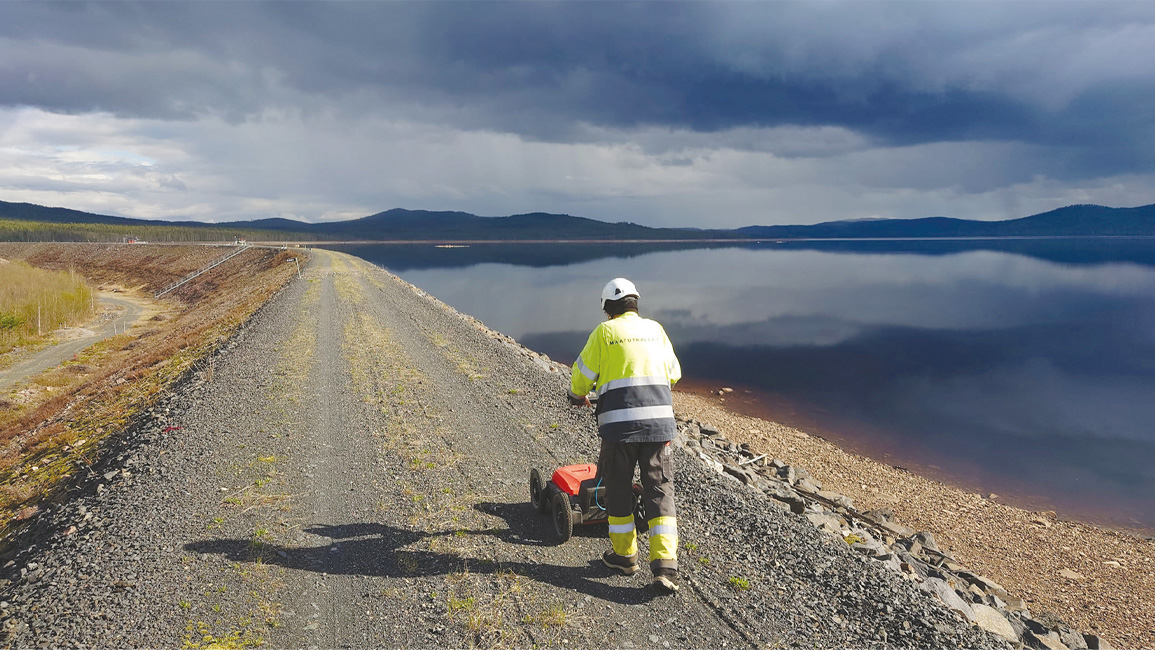
GSSI customers have been using GPR systems for decades to conduct non-destructive dam investigations that provide information on sediment build-up and leak or void detection. Low frequency GPR systems can offer a number of non-destructive testing options for dam monitoring. High frequency antennas are ideal concrete condition assessment and repair, detecting voids in real-time, and accurately locating rebar position and depth (Image courtesy of Suomen Maatutkapalvelu).