

This may be a simple question; however, the answer is often complex and will vary according to many factors. The Dam Safety Group, which exists to bring together some of the latest technologies available for dam assessment and monitoring, seeks to provide some general advice regarding funding. The availability of detailed advice will invariably be country specific.
Every dam is unique, and owners and operators work within often complex regulatory frameworks which may differ by location, the classification of the dam and its potential risk. Dam owners are legally responsible for the safe operation of their structures. This includes responsibility for routine inspection and maintenance and the documenting the of results. As dams usually have long working lives, over time there will be deterioration and sometimes external factors which compromise the safety of the structure. Funding for rehabilitation or upgrades may be available but will need to be sought.
Ultimately, most funding will be from the national government as part of their duty of care for water resources and the safety of their citizens. The allocation of available funding may be through government agencies, quasi-government bodies, regulatory authorities or devolved to local government. In some cases, funds may be available through specific programmes which may be dedicated to dams or exist as part of a larger remit of responsibility. In addition, depending upon who the dam stakeholders are, there may also be privately funded bodies that can assist.
Allocation of funding and grants will usually come with a set of qualification criteria, which can vary greatly and may include how the dam is classified by regulatory authorities. Funds are often targeted at rehabilitation and upgrade engineering works, where there are safety issues. In addition, engineering assessments necessary for planning these works may also be covered. These assessments may include on-off engineering/geotechnical investigations or where more data is required more automated continuous monitoring systems may be covered.
In general, routine inspection and maintenance will not be covered by external funding and grants.
The need to take remedial action is often highlighted by specific events or near misses, such as excessive rainfall or seismicity, which may threaten or lead to overtopping, a common pre-cursor to total dam failure. However, the event may be symptomatic of longer-term problems such as structural deterioration over time, change of usage patterns, erosion, spillway blockages or climate change. Routine inspections and risk assessments may also highlight the need for rehabilitation or engineering assessment by documenting gradual changes and problems that are accelerating. In some cases, the availability of funding will depend upon how a dam is classified, in terms of size or risk, and only certain classifications may be eligible for funding.
For all dams, from the spectacular hydro-electric arch dams to the humblest levees, there should be a variety of professional expertise available to advise on external funding.
The dam safety professionals who routinely inspect your dam and engineering assessment organisations that have been engaged should be a good place to start enquiries as they will have experience covering many dams. Central and local government, together with their agencies and regulatory bodies may have first hand information on funding and should have knowledge on who is responsible for the administration of available grant programmes. The International Commission On Large Dams (ICOLD) has committees in many countries, often forming part of organisations concerned with dam safety, including interests in smaller dams. These groups may also be associated to national professional civil engineering societies. These groups will encompass the broadest range of expertise in dam safety which should include advice on funding. Stakeholders, both public and private, and clients who rely on your dam have a need for its ongoing safety and efficient operation and may also be able to offer advice.
Dam owners seeking funding for dam safety improvements and rehabilitation should initially contact their state government’s dam safety office for advice. The Association of State Dam Safety Officials (ASDSO) also provides information and guidance on funding. Further resources can be found in the table of organisations below.
With 90,000 dams in the USA and an average age of 60 years the need for federal assistance for rehabilitation has been recognised with funding being made available through the Bipartisan Infrastructure Law. The package is worth $1.2trillion over 5 years, but the amount available for dams remains unclear, while awards will likely be on a project-by-project basis. ASDSO have estimated that the cost of rehabilitation of the nation’s non-federal dams is $76billion. Over the next five years, the Federal Emergency Management Agency (FEMA) will award $733 million through the Bipartisan Infrastructure Law in dam safety grants to states and territories to enhance dam safety and rehabilitate or remove aging dams.
An ongoing allocation of grants available to states is through the High Hazard Potential Dam Rehabilitation programme (HHPDR) administered by FEMA. “High Hazard Potential” is a classification standard for any dam whose failure or mis-operation will cause loss of human life and significant property destruction. This programme provides technical, planning, design and construction assistance in the form of grants for the rehabilitation of eligible high hazard potential dams, with $22million awarded in 2022.
| ACRONYM | ORGANISATION | PROVISION |
|---|---|---|
| ASDSO | Association of State Dam Safety Officials | Resources for dam safety and funding |
| USACE | US Army Corps of Engineers | Owns and operates over 700 federal dams |
| NID | National Inventory of Dams (USACE) | Reference list of USA dams |
| IWR | Institute for Water Resources (USACE) | Resources for water management |
| FEMA | Federal Emergency Management Agency | Grants for hazard mitigation |
| USSD | United States Society on Dams (ICOLD) | Resources for dam safety |
| FERC | Federal Energy Regulatory Commission | Licenses and inspects hydroelectric projects |
| NDSP | National Dam Safety Program (FEMA) | Grants for dam safety |
| HHPDR | High Hazard Potential Dam Rehabilitation | Grants programme administered by FEMA |
| ASCE | American Society of Civil Engineers | Resources for civil infrastructure |
| COUNTRY | ORGANISATION | WEBSITE |
|---|---|---|
| World | International Commission On Large Dams (ICOLD) | www.icold-cigb.org |
| USA | United States Society on Dams (USSD) | www.ussdams.org |
| USA | Association of State Dam Safety Officials (ASDSO) | www.damsafety.org |
| USA | Institute for Water Resources (IWR) | www.iwr.usace.army.mil |
| USA | Federal Emergency Management Agency (FEMA) | www.fema.gov |
| USA | Federal Energy Regulatory Commission | www.ferc.gov |
| USA | American Society of Civil Engineers | www.asce.org |
| UK | British Dam Society | www.britishdams.org |
| France | French Committee for Large Dams (CFGB) | www.barrages-cfbr.eu |
| Germany | German Committee on Large Dams | www.talsperrenkomitee.de |
| Spain | Spanish National Committee on Large Dams | www.spancold.org |
| Italy | Italian National Committee for Large Dams | www.itcold.it |
 Kinemetrics Implements KMIDam Platform at Bakun Dam in Malaysia
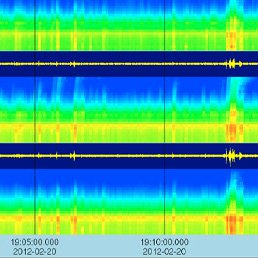
Catastrophic consequences result from dam failures due to earthquakes, making the reliable assessment of dam safety indispensable. Only with actionable information based on instrumental observation of structural behavior can operators make decisions confidently during seismic […]
Read more... Investigating Artificial Levees
Artificial levees are critical components in flood defenses. Structural defects in these levees can seriously compromise their effectiveness. In Hungary, where one-third of the country is protected by a 4,200 km long levee system, GSSI’s […]
Read more... Why use Robertson Geo technology for Dam Safety?
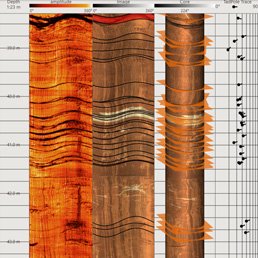
The use of geophysical logging techniques for dam inspection and monitoring has long been recognised as critical for structural assessment over the life of a dam. Subsurface investigation provides detailed insight into the fabric and […]
Read more...